
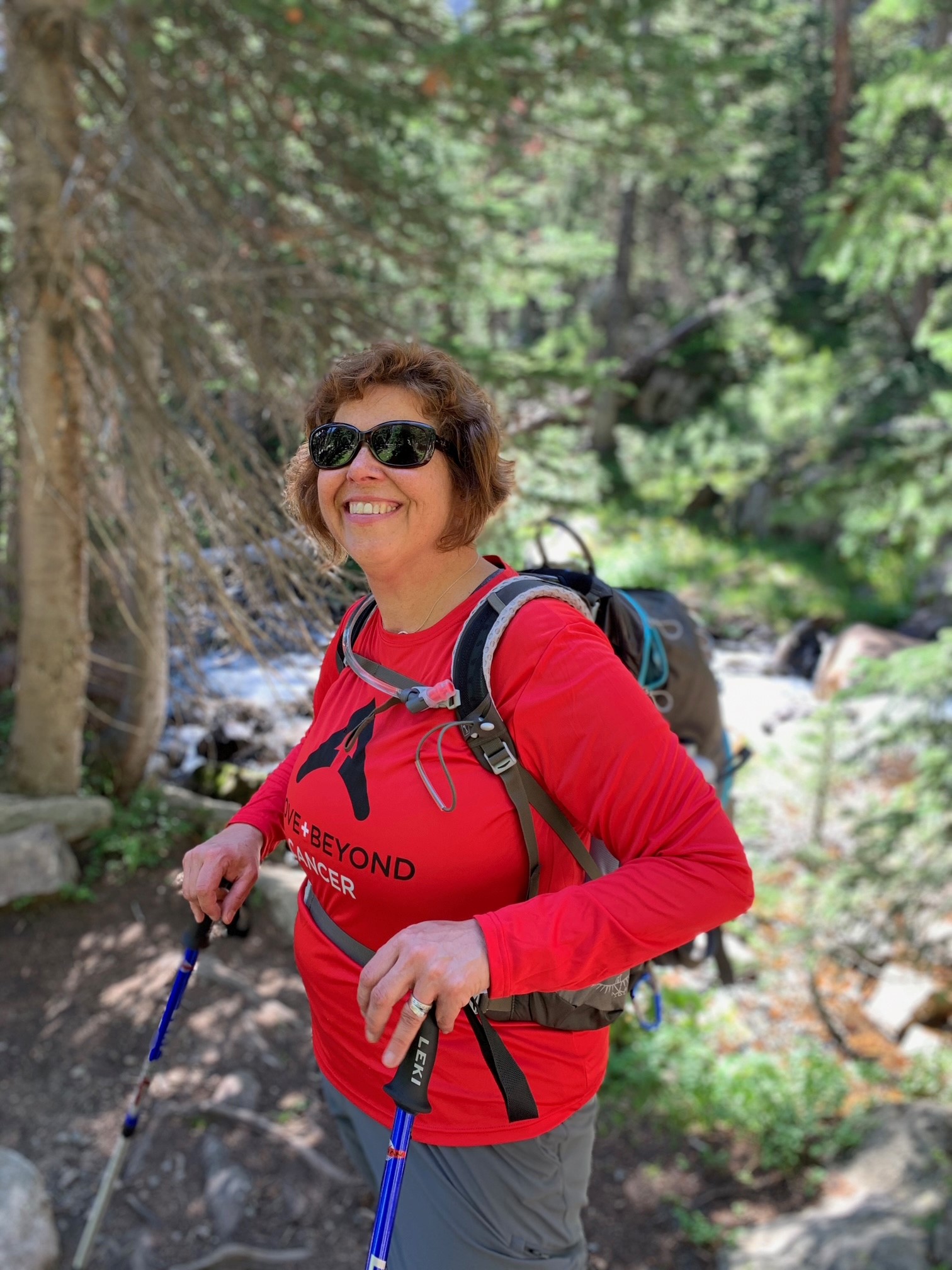
For Breast Cancer Awareness Month, we spoke with Louise Crall, Human Resources and Community Engagement Director at EFR. Louise is a 2-time cancer survivor, 15 years post-cervical cancer and 10 years post-breast cancer. We talk about noticing the first signs, navigating treatment, leaning on community, and what can help individuals going through cancer treatment both at work and at home.
Q: How did you first realize something was wrong?
A: It was early September—almost exactly a month before my annual mammogram. I woke from a dream and in that dream, I had a distinct pain in my right breast. During my morning shower I did a self-exam and found a small lump—bigger than a BB, smaller than a marble. If you know anything about me, I’m not a person who will sit around and wait. I wouldn’t say that I’m a hypochondriac, but I do take my health seriously. Especially since five years earlier, I had been diagnosed with cervical cancer. I couldn’t get in quickly with my OB, so I called my primary care doctor. He took it seriously, got me in right away, and moved me through the next steps. After imaging and a biopsy, I had a confirmed diagnosis by mid-September.
Q: What was going through your head in those first days?
A: Unfortunately, I come from a family with a history of cancer. Both of my parents had cancer and I am no stranger to cancer. I am a non-smoker, reasonably healthy, and don’t have any risky habits. But even with that, hearing cancer is freaky. My first practical question to a close oncologist friend was, “Is this the kind of cancer that means I’ll lose my hair?” The answer was yes. I was diagnosed at stage two and began developing a care team and a plan.
Q: What treatment path did you follow?
A: The sequence was chemotherapy, surgery, radiation, then reconstruction. Ten years ago (and often still today), the preference was to start with chemo to contain the cancer, then proceed to surgery. My chemo ran October through March. It was hard, but now that I’m ten years out, I choose to look at it as a gift.
Q: How did cancer affect your family life?
A: The timing was heartbreaking—my oldest was a high-school senior. I didn’t want her year to become “about me,” but cancer forces its way into the center of everything. My husband stepped up in a big way, and I had to let go of control at home. That surrender was hard and necessary.
Q: Did you use support groups or formal resources?
A: Yes, and I wish I’d gone sooner, during Chemo the hospital nutritionist handed me a short booklet written by a survivor who said her biggest regret was delaying group support. That nudged me to attend a monthly breast-cancer group—where I met people ahead of me on the path. Seeing survivors in the room gave me hope and practical wisdom I didn’t even know to ask for. They asked questions that I didn’t think to ask or that I was too afraid to ask. Two of the groups that were very helpful for me and that I am still involved with today are Breast Cancer Support Group (via oncology practice & hospital) and Above + Beyond Cancer. These organizations that make day-to-day life easier by offering a sense of community and tangible help. Above + Beyond Cancer has provided me so many opportunities and friendships- I am quite certain I wouldn’t be as active without this organization!
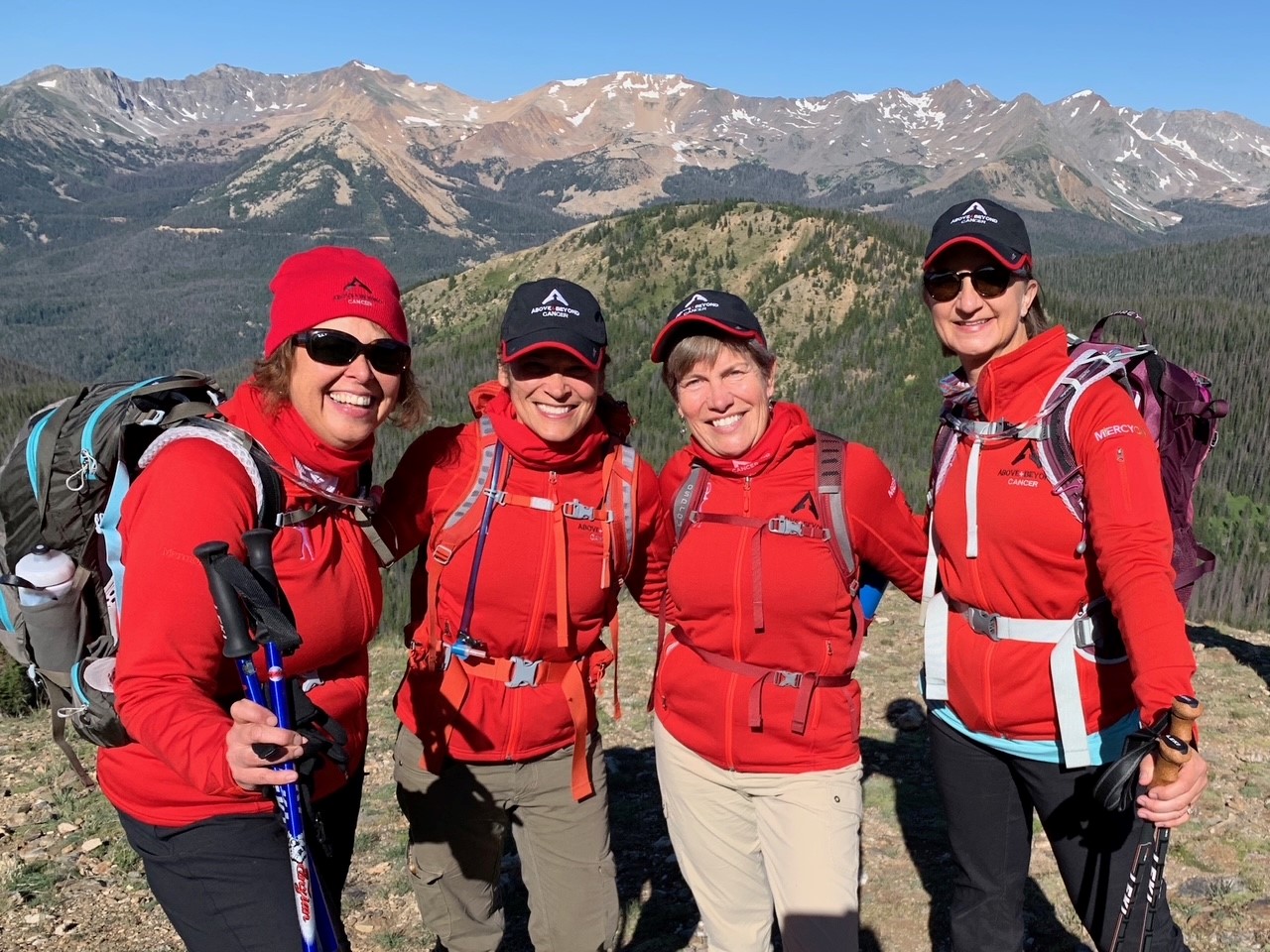
Colorado hiking trip with Above + Beyond Cancer breast cancer survivors – Louise, Mary Van Heukelom, Lynn Mankins and Val Armstrong
Q: What kind of help from others actually helps?
A: Specific, practical offers but also, don’t be afraid to make specific requests. A meal train was set up for me and because I had met with a nutritionist, I had very specific items that I knew I wanted to eat(and not eat). I put a cooler in the front porch so people could drop the meal off without needing to a visit. This helped to protect my time with my family. My mother-in-law made me a mastectomy pillow that protected my chest while sleeping. Emotional support matters too. My group of friends from high school would send me short, funny video pep talks on chemo days. Humor carried us—dark jokes included. It doesn’t have to be expensive; it has to be thoughtful.
Q: How did you manage fear and anxiety—especially after treatment?
A: I’m vigilant but try not to spiral. I know my body and flag changes quickly. I also set limits on how deep I’ll research before I call my doctor—because rabbit holes increase anxiety. Support groups helped normalize the ongoing “what if” while giving me tools to live fully now.
Q: Do you experience survivor’s guilt?
A: Yes. A dear friend from our survivor community had a recurrence and now has stage four cancer, so it’s not curable, and she is now managing the time that she has and the quality of life that she has. And I can honestly say that all of us in that circle of survivors has had the thought “it could be me.” So, there is a sense of guilt around that, the thinking of “why her and not me?” But I know that she wouldn’t want any of us to be thinking that. I think this is another reason why community is so important, to talk through all the different feelings and emotions that surround the cancer journey.
Q: Let’s talk a little bit about your work life. You are an HR professional, so you have a unique perspective as well. What should workplaces do when an employee is diagnosed?
A: Start with choice and consent. My leader asked what I wanted to share. Because my appearance and schedule would change during chemo, we sent an all-agency note with my permission outlining when I’d be out and how to get updates. I used CaringBridge and shared that link so that people could keep up with my journey and I wouldn’t get bogged down with questions at the office.
From an HR perspective:
- Encourage FMLA (if eligible). It protects time for treatment and recovery; intermittent leave can cover recurring appointments.
- Offer flexible work (remote options, adjusted hours) and designate a point person to triage non-urgent tasks.
- Plan coverage (temporary contractors or cross-training) so the employee isn’t torn between healing and work.
- Model safe norms encourage office staff to not come in when they are sick and the proper use of masks if needed.
- Ask, don’t assume. “What would be most helpful for you?” is the right first question.
Q: What would you want someone who is newly diagnosed to know?
A: You don’t have to do it alone. Build your team—medical, family, and peer support. Accept practical help. Movement, if you can tolerate it, lifts mood and energy. And remember: there are people on the other side of this who will gladly walk with you until you get there. And also, having cancer becomes a part of your identity. When I introduce myself in trainings, I always include that I’m a cancer survivor. But I am going to tell you this, now that I’m ten years out, it was generally a gift. That is how I choose to look at it. Because of my cancer journey, I have developed an amazing gratitude for life. I have an appreciation for my family and friends, and even people I did not know that well, that showed up in ways that I never even imagined were possible.
If you’d like to hear more about Louise’s story, check out EFR’s Emotion Well podcast, “Making Connections with Cancer”.